Home / Blog
Design the future with us.
Do you want a deeper look into the innovation, design, and technology
that shapes what we do at Dysol? You’ve come to the right place.

Innovative Solutions: Developing Your New Hardware Product
Innovation in hardware product development isn't about adding more features or using the latest technology buzzwords. It's about solving real problems in ways that actually work when products leave the laboratory and enter users' hands. The graveyard of failed hardware startups is filled with innovative concepts that couldn't be manufactured economically, brilliant features that users didn't want, and revolutionary designs that broke after two weeks of real-world use. The challenge facing anyone developing new hardware products is navigating the gap between vision and reality. Your concept might be genuinely innovative. Your market research might show demand. Your prototype might work beautifully. None of that guarantees success. Hardware products succeed when innovation serves users, aligns with manufacturing realities, and survives the economic constraints of bringing physical products to market. True innovation in hardware development comes from solving the unglamorous problems that kill most products: making electronics reliable across temperature extremes, designing mechanisms that survive millions of cycles, creating assemblies that factory workers can build consistently, optimizing costs without destroying quality, and delivering products that work as promised rather than requiring constant support.
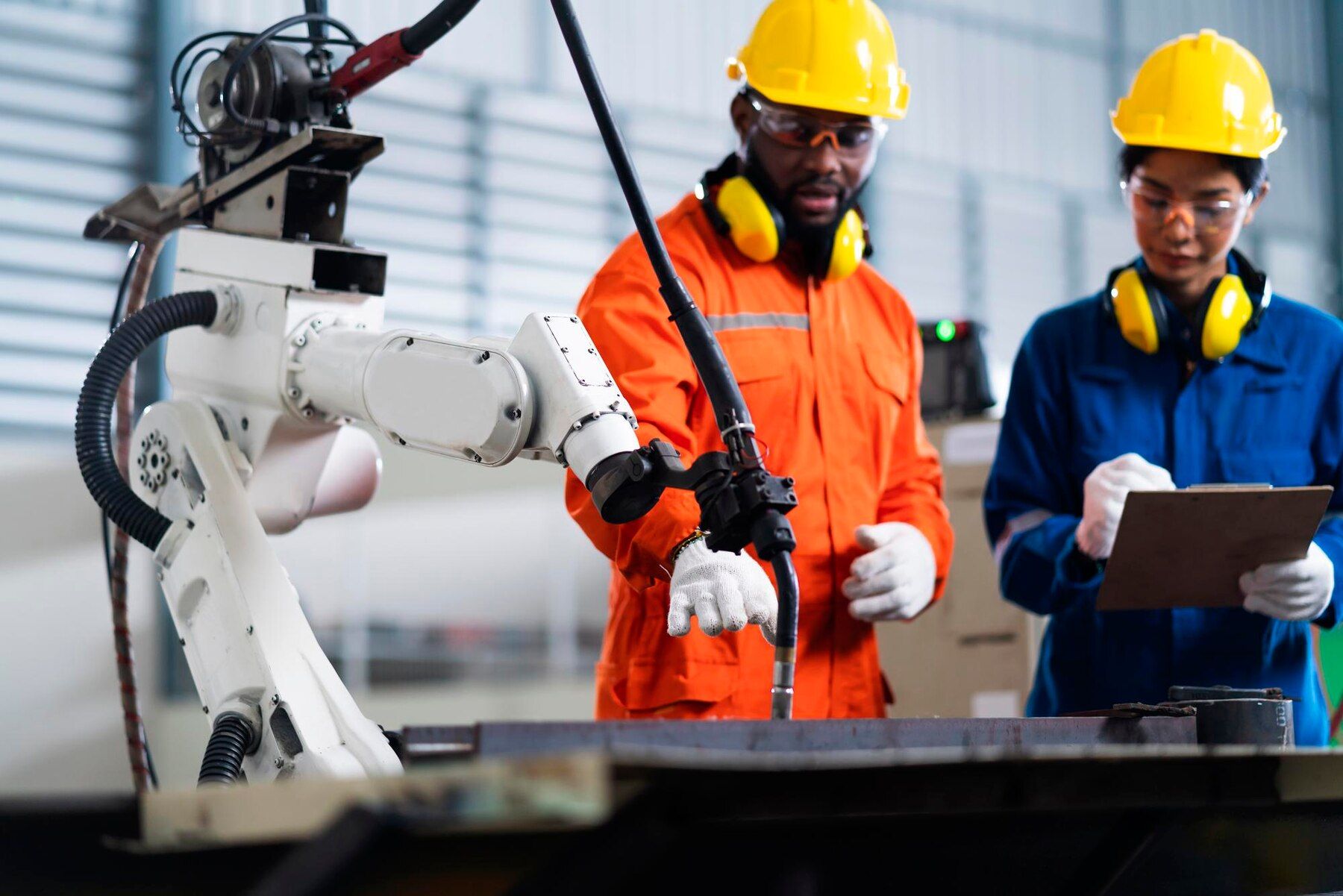
The Future of Manufacturing: How Computer Vision is Revolutionizing Quality Control
In today's hyper-competitive manufacturing landscape, the margin between profit and loss often comes down to quality control. A single defect that slips through manual inspection can trigger recalls costing millions, damage brand reputation, and destroy customer trust. Yet despite these stakes, many facilities still rely on the same quality control methods used decades ago: human inspectors, sampling protocols, and reactive problem-solving. The most expensive failures in manufacturing happen where there is no real-time visibility. This is where computer vision enters the picture—not as a futuristic concept, but as a practical, deployable solution transforming factory floors worldwide.
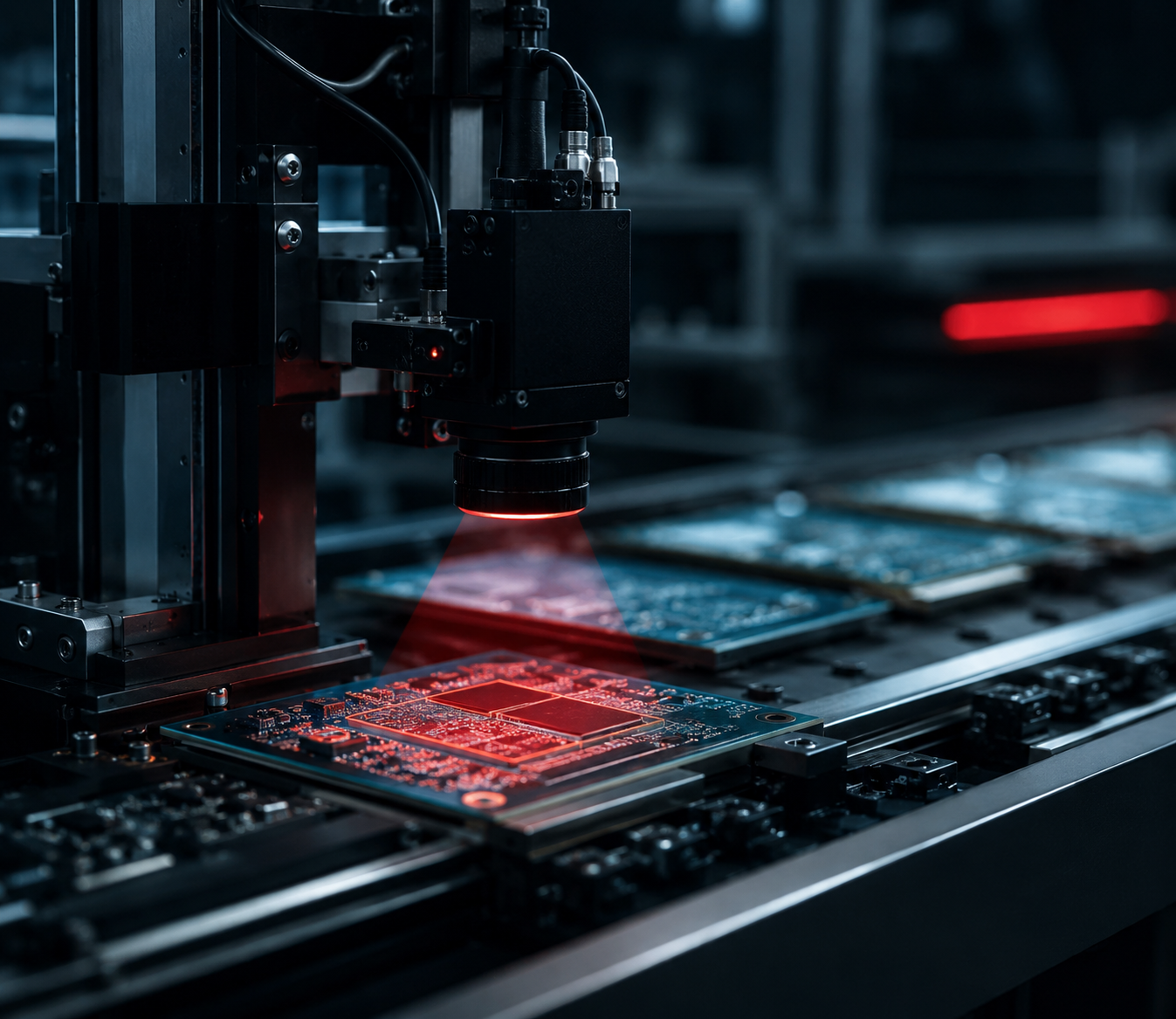
Custom Computer Vision Solutions for Manufacturing Quality Control
Manufacturing quality inspection used to mean human inspectors with checklists, magnifying glasses, and tired eyes at the end of a 12-hour shift. Miss a defect? It ships to the customer. Catch too many false positives? Production slows down and costs go up. Computer vision changes this. Cameras don't get tired. AI models don't have bad days. A properly deployed vision system inspects 100% of products, catches defects humans miss, and does it faster than manual inspection. We deploy Vision AI systems in production manufacturing environments-textile factories, agricultural processing, electronics assembly. These aren't research projects or demos. They're live systems inspecting real products on real production lines, right now. Here's what actually works, what doesn't, and what it takes to go from proof-of-concept to a system that runs reliably for months without human intervention.

Product Development That Actually Ships: Turning Ideas Into Market-Ready Products
Every successful product begins as an idea—a vision of something that could exist, solve a problem, or create value. Most ideas stay just that: concepts that never become physical reality. The journey from initial spark to manufactured product sitting in customers' hands traverses a treacherous landscape where enthusiasm meets engineering reality, where ambition confronts economics, and where brilliant visions collide with the constraints of physics, manufacturing, and market timing. The difference between ideas that become products and those that remain PowerPoint presentations comes down to product development capability: the systematic process of transforming concepts into tangible, manufacturable, market-ready solutions. This capability transcends individual technical skills. It requires orchestrating multiple disciplines—industrial design, engineering, manufacturing, quality assurance, regulatory compliance—into coordinated action toward shared goals.
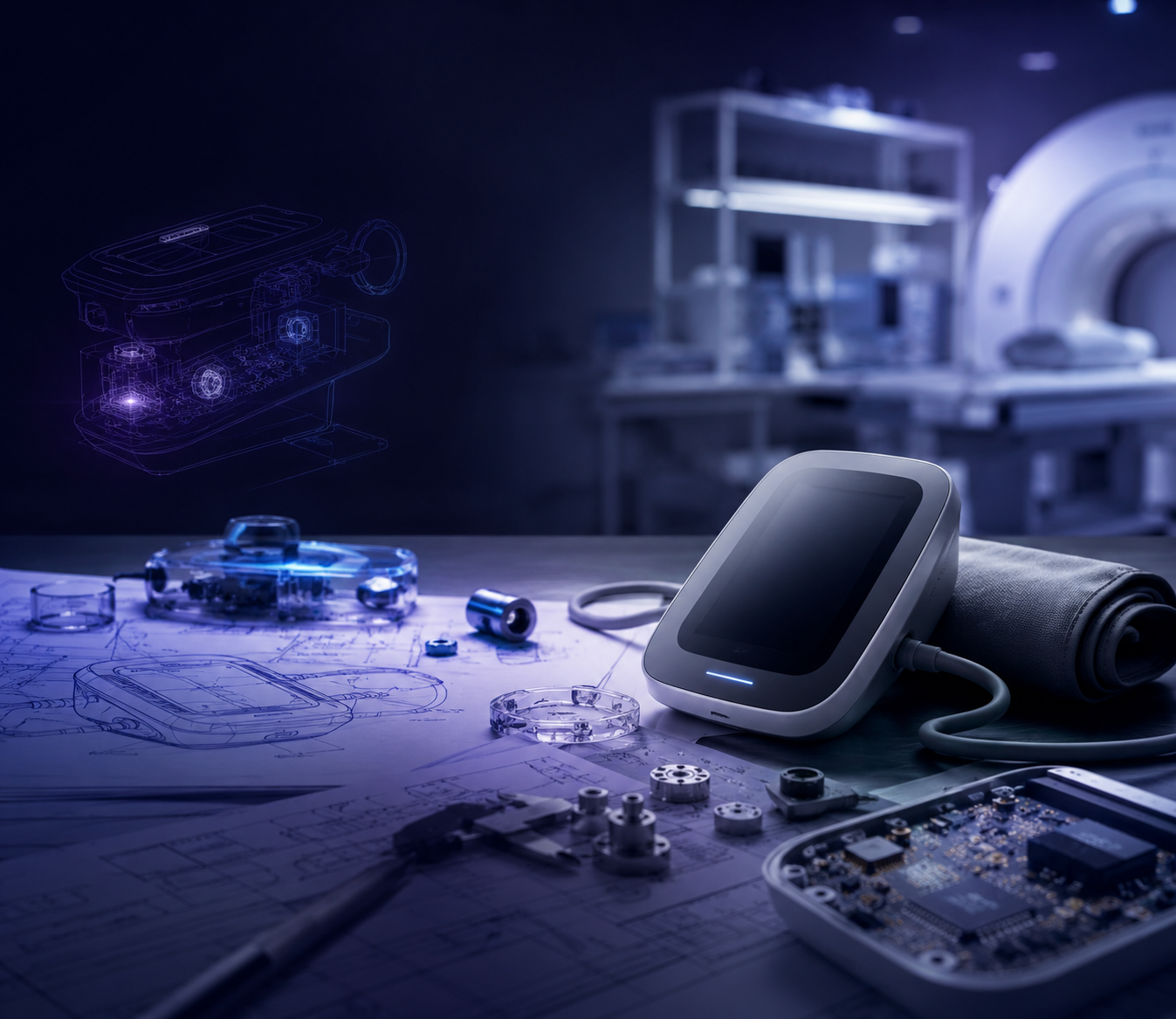
Medical Device Engineering: From Concept to FDA/CE Approval
Developing a medical device is different from building consumer electronics. The stakes are higher, the regulations are stricter, and the engineering tolerances are tighter. One mistake doesn't just mean a bad review-it can mean regulatory rejection, delayed market entry, or worse, patient harm. We've taken medical devices from napkin sketches to CE-certified products shipping to hospitals and consumers. Here's what the process actually looks like, what costs money, and where most projects get stuck.

Medical Device Development: Engineering Products That Save Lives
Medical devices represent the intersection of engineering excellence and human impact. A well-designed insulin pump transforms diabetes management. An innovative wound care device accelerates healing and reduces infection risk. A breakthrough diagnostic tool enables earlier disease detection and more effective treatment. These products directly affect patient outcomes, quality of life, and occasionally, survival itself. Yet medical device development presents challenges unlike any other product category. Stringent regulatory requirements, exacting performance specifications, liability concerns, and the fundamental imperative to "do no harm" create an engineering environment where mistakes have consequences measured not in warranty costs or bad reviews, but in human suffering and potentially lives lost. The companies and teams that succeed in medical device development master a unique combination: sophisticated technical capabilities, rigorous quality systems, regulatory expertise, and an organizational culture that never compromises on safety. Understanding what makes medical device development distinctive—and difficult—provides foundation for success in this high-stakes domain.

From Napkin Sketch to Working Prototype: The Art and Science of Rapid Product Development
Every transformative product begins as an idea—sometimes scribbled on a napkin during lunch, sometimes emerging from months of market research, sometimes striking like lightning during a midnight epiphany. But ideas are abundant and cheap. Execution is rare and valuable. The crucial first step in execution is the prototype: the tangible proof that your concept can exist in physical reality, that the laws of physics permit it, that engineering can realize it. Prototypes serve multiple critical purposes: they validate technical feasibility, reveal unexpected challenges, enable user testing, support investor pitches, guide manufacturing planning, and transform abstract concepts into concrete objects that teams can react to, critique, and improve. Yet many brilliant ideas never reach the prototype stage. They languish as untested concepts, fade from memory, or collapse when initial investigation reveals insurmountable obstacles. Understanding how to efficiently move from idea to working prototype—what to build, what to test, what to iterate, when to pivot—dramatically increases the likelihood that your concept becomes a successful product. This capability to rapidly prototype and iterate represents competitive advantage in fast-moving markets where first-mover benefits accrue to those who can execute quickly without sacrificing quality.

Engineering Hardware That Works: From Concept to Production-Ready Reality
Building hardware products that actually work—not just in controlled lab conditions, but in the hands of real users under real-world stresses—represents one of the most complex engineering challenges in product development. Unlike software, where bugs can be patched with updates, hardware mistakes become physical objects: expensive inventory that can't be sold, warranty claims that destroy margins, or worst case, safety issues that trigger recalls. Yet despite these risks, the allure of hardware innovation continues to drive entrepreneurs, corporations, and research teams to pursue ambitious product visions. The difference between success and failure rarely comes down to the quality of the initial idea. Instead, it hinges on the ability to navigate the treacherous path from concept to production—a journey littered with the wreckage of brilliant ideas undermined by poor execution.

Building IoT Devices That Actually Work: Engineering Connected Products for the Real World
The promise of the Internet of Things has captivated technologists and business leaders for over a decade: billions of connected devices generating insights, automating processes, and transforming industries through data-driven intelligence. Yet for every IoT success story, dozens of failed projects gather dust in warehouses—products that worked perfectly in controlled demonstrations but failed catastrophically in real-world deployments. The gulf between IoT promise and IoT reality stems from underestimating the engineering challenges of creating devices that must operate reliably for years, in diverse environments, with minimal maintenance, while consuming minimal power and communicating over unreliable networks. Building IoT devices that actually work requires mastering interconnected technical domains: embedded systems, wireless communication, power management, cloud infrastructure, security, and manufacturing at scale.