 Home
HomeThe Hidden Cost of Manual Inspection
Traditional quality control follows a predictable pattern: production runs at full speed while inspectors sample products at intervals, checking for defects based on established criteria. This approach made sense in an era of slower production lines and simpler products. Today, it's fundamentally broken.
Consider a textile manufacturer producing thousands of meters of fabric per hour. Manual inspection catches perhaps 70-80% of defects—an industry-standard rate that sounds acceptable until you calculate the downstream costs. That remaining 20-30% of defective material gets shipped to customers, cut into garments, or woven into finished products. By the time the defect is discovered, the manufacturer faces returns, rework, or worse—lost contracts.
The problem compounds at scale. A single production line might run 16-20 hours daily. Human inspectors experience fatigue, distraction, and inevitable variations in judgment. What one inspector flags as defective, another might approve. This inconsistency creates its own quality crisis: products rejected that should pass, and defects approved that should fail.
Modern production speeds have outpaced human capability. Electronics assembly lines, automotive component manufacturing, and food processing operations all share the same challenge: products move too fast for comprehensive manual inspection without slowing production to economically unviable speeds.
Computer Vision: From Research Lab to Factory Floor
Computer vision technology has matured from experimental AI research into production-ready systems capable of operating reliably in harsh industrial environments. The transformation happened through three key developments:
Edge computing brought processing power to the production line. Early computer vision systems required sending images to cloud servers for analysis, introducing latency incompatible with real-time manufacturing. Modern edge devices run inference locally, analyzing images in milliseconds and triggering immediate responses when defects appear.
Training data became more accessible and model training more efficient. Building effective computer vision systems once required tens of thousands of labeled images and weeks of training time. Transfer learning, synthetic data generation, and improved architectures now enable robust defect detection with far smaller datasets and faster iteration cycles.
Hardware costs dropped dramatically. Industrial cameras, specialized processors for AI inference, and mounting systems that once represented prohibitive capital expenses now cost a fraction of their historical prices, making deployment economically viable even for mid-sized manufacturers.
These advances converged to make computer vision practical for quality control across industries—from textiles to electronics, from food processing to automotive components.
Real-World Computer Vision Deployment: A Case Study
When Dysol deployed a computer vision system for a large textile manufacturer, the challenge was representative of the broader industry: fabric moving at high speed across multiple production lines, with defects ranging from obvious tears and holes to subtle color variations and pattern misalignments.
The system architecture combined multiple components working in concert:
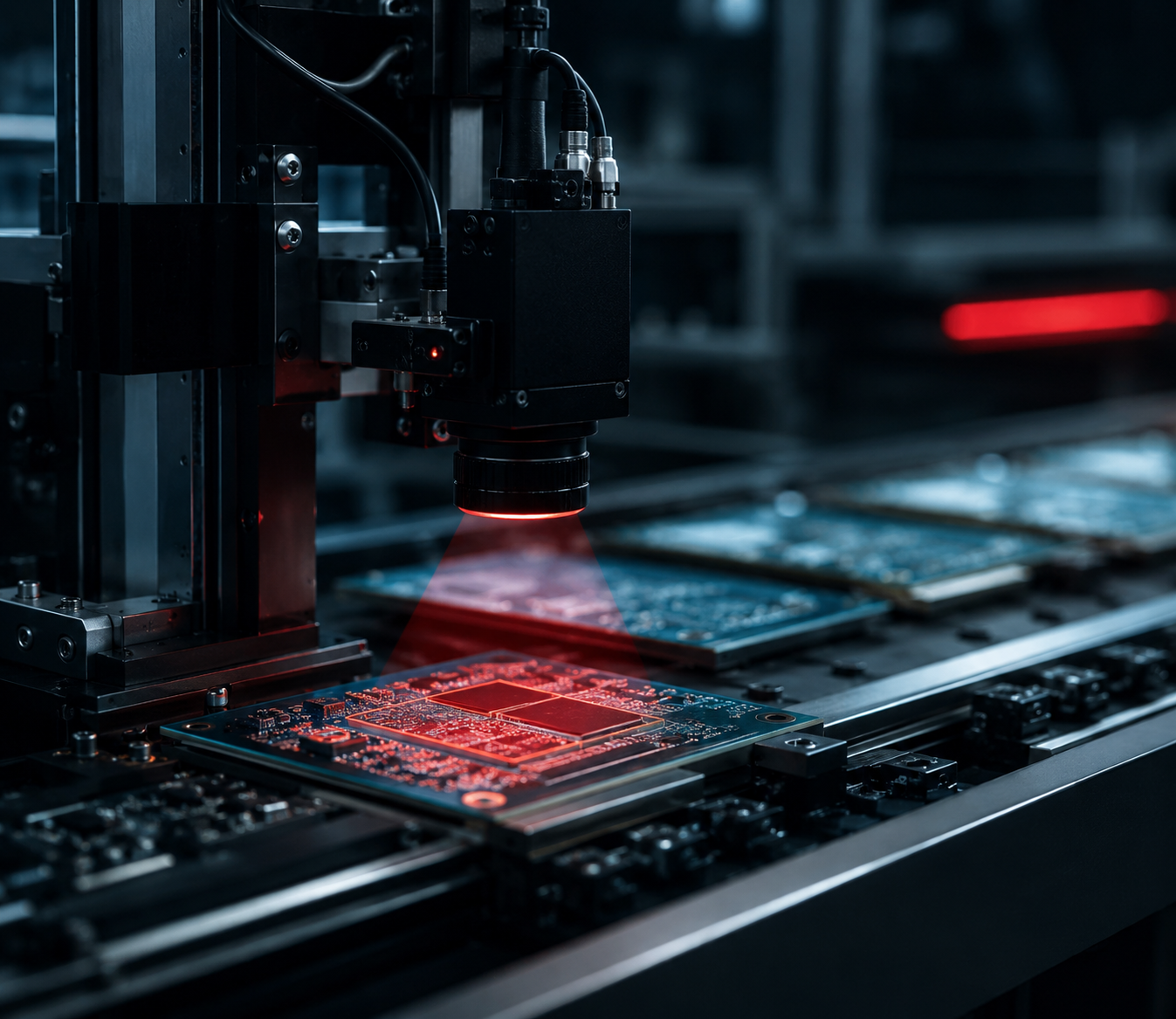
High-resolution industrial cameras positioned above the production line captured fabric images continuously as material moved through the manufacturing process. Camera placement and lighting design proved critical—consistent illumination eliminated shadows and glare that could trigger false positives or mask actual defects.
Edge computing devices mounted directly at each inspection point ran trained neural networks to analyze images in real-time. The system identified defect types automatically: holes, stains, color variations, pattern defects, and dimensional issues. When defects appeared, the system triggered immediate alerts and logged defect locations with precision.
Cloud connectivity enabled centralized monitoring across multiple lines and facilities. Production managers could view quality metrics in real-time, track defect patterns, and identify systemic issues before they escalated into major problems.
The results transformed the manufacturer's quality control capability:
- Defect detection accuracy increased from approximately 75% (manual inspection) to 95%+ (computer vision)
- Inspection speed matched production line velocity without requiring slowdowns
- Consistency eliminated variations between different inspectors or shifts
- Data capture enabled root cause analysis impossible with manual inspection
Perhaps most significantly, the system paid for itself within months through reduced waste, fewer customer returns, and improved production efficiency.
Beyond Defect Detection: The Strategic Value of Vision Data
Computer vision systems do more than catch defects—they generate continuous streams of production data that transform how manufacturers understand and optimize their operations.
Predictive maintenance becomes possible when vision systems track equipment performance indicators. A gradual increase in certain defect types might signal that machinery needs calibration or maintenance before catastrophic failure occurs. This shift from reactive to predictive maintenance reduces downtime and extends equipment life.
Process optimization accelerates when every product generates quality data. Manufacturers can correlate quality outcomes with production parameters—line speed, temperature, material batches, time of day—to identify optimal operating conditions. What once required expensive consultants and weeks of analysis now happens continuously and automatically.
Supply chain visibility extends when vision systems verify incoming material quality. Automated inspection of raw materials or components from suppliers catches quality issues before they enter production, preventing defective inputs from becoming defective outputs.
Compliance documentation becomes automatic. Industries with strict quality requirements—medical devices, aerospace, automotive—must maintain detailed quality records. Computer vision systems generate these automatically, with image evidence and metadata for every product inspected.
Technical Architecture: Building Robust Vision Systems
Deploying computer vision for industrial quality control requires careful system design across multiple layers.
Camera Selection and Positioning
Industrial cameras differ dramatically from consumer cameras. They must operate continuously in challenging environments—temperature extremes, vibration, dust, and variable lighting. Camera selection depends on multiple factors:
- Resolution requirements balance defect size against data processing demands. Detecting microscopic defects requires higher resolution than identifying large tears or missing components.
- Frame rates must match or exceed production line speed while allowing sufficient exposure time for clear images.
- Lens selection determines field of view and working distance from products.
- Lighting design often determines success or failure—consistent, appropriate illumination is non-negotiable.
Model Training and Optimization
Effective computer vision models require training on representative data that captures the full range of products and defect types the system will encounter:
Dataset creation begins with collecting images from actual production runs, including both acceptable products and examples of every defect type. Synthetic data augmentation—applying programmatic variations to existing images—helps expand limited datasets.
Model architecture selection balances accuracy against inference speed. More complex models achieve higher accuracy but require more powerful hardware and longer processing time. The optimal choice depends on specific application requirements.
Training and validation follow standard machine learning practices but with special attention to imbalanced datasets (defects are typically rare compared to acceptable products) and to ensuring the model generalizes beyond the training data.
Edge deployment requires model optimization—quantization, pruning, and other techniques that reduce model size and speed inference while maintaining accuracy.
System Integration
Computer vision doesn't operate in isolation—it must integrate with existing manufacturing systems:
- Production line integration enables the system to trigger actions when defects are detected: stopping the line, marking defective products, or diverting them for manual review.
- Data systems integration connects vision systems with manufacturing execution systems (MES), enterprise resource planning (ERP) systems, and quality management systems to create unified data flows.
- Alert and notification systems ensure that the right people receive timely information about quality issues requiring human intervention.
Implementation Roadmap: From Pilot to Scale
Successful computer vision deployment follows a structured path:
Phase 1: Pilot Deployment (Weeks 1-8)
Begin with a single production line or workstation representing typical operations. This pilot validates the technology, identifies integration challenges, and demonstrates ROI before larger investment.
Key activities include:
- System design and hardware specification
- Camera installation and calibration
- Initial dataset collection and model training
- Integration with line control systems
- Performance validation against manual inspection
Phase 2: Refinement and Optimization (Weeks 9-16)
Use pilot data to refine the system:
- Model retraining with expanded datasets
- Lighting and camera positioning optimization
- False positive/negative reduction
- User interface refinement based on operator feedback
- Documentation and training materials development
Phase 3: Scale Deployment (Weeks 17+)
Roll out proven systems across additional lines and facilities:
- Standardized hardware specifications
- Automated deployment procedures
- Centralized monitoring and management
- Continuous improvement processes
- ROI tracking and reporting
Industry-Specific Applications
Computer vision adapts to diverse manufacturing contexts:
Textile and Fabric Manufacturing
Fabric inspection represents one of the most challenging computer vision applications due to pattern complexity and defect variety. Systems must distinguish between pattern variations (acceptable) and defects (unacceptable) at high speeds. Successful deployments detect holes, stains, color variations, pattern defects, and dimensional issues with accuracy exceeding human inspection.
Electronics Assembly
PCB inspection, component placement verification, and solder joint quality assessment benefit enormously from computer vision. Defects invisible or difficult to detect manually—slightly misaligned components, insufficient solder, contamination—become easily detectable with appropriate cameras and lighting.
Food Processing
Vision systems verify product appearance, size, color, and presence/absence of components. They detect foreign objects, check packaging integrity, and ensure compliance with food safety standards. The ability to inspect 100% of products without slowing production lines delivers both safety and efficiency improvements.
Automotive Manufacturing
From paint finish inspection to assembly verification, computer vision ensures that components meet stringent quality standards. Systems verify that all parts are present and correctly installed, that paint coverage is uniform and defect-free, and that dimensional tolerances are maintained.
Pharmaceutical and Medical Device Manufacturing
Industries with strict regulatory requirements benefit from computer vision's consistent performance and automatic documentation. Every product inspected generates verifiable quality records with image evidence, simplifying compliance and audit processes.
Overcoming Common Implementation Challenges
Organizations deploying computer vision frequently encounter predictable challenges. Understanding these in advance enables proactive mitigation:
Data Collection and Labeling
Building effective training datasets requires time and domain expertise. Defects are typically rare, making it difficult to collect sufficient examples of all defect types. Solutions include:
- Running pilot deployments in "learning mode" to collect data before going live
- Using synthetic data augmentation to expand limited datasets
- Implementing active learning where the system flags uncertain classifications for human review and learning
- Partnering with computer vision specialists who can create effective models from smaller datasets
Environmental Variability
Factory environments change—lighting varies throughout the day, products may have different surface finishes or colors, and equipment vibrations can affect camera positioning. Robust systems must handle this variability:
- Environmental monitoring detects and compensates for lighting changes
- Regular calibration maintains system accuracy
- Model training includes diverse environmental conditions
- Hardware selection prioritizes industrial-grade components designed for harsh environments
Integration Complexity
Manufacturing facilities typically run multiple software systems that must work together. Computer vision systems must integrate with:
- Line control systems to trigger responses when defects are detected
- MES and ERP systems to log quality data
- Alert systems to notify appropriate personnel
- Maintenance management systems to schedule calibration and service
Successful integration requires careful planning, clear API specifications, and often custom middleware to connect disparate systems.
Change Management
Technology adoption requires human adaptation. Operators may initially distrust automated systems, fear job loss, or resist changing established procedures. Effective change management addresses these concerns:
- Involve operators early in system design to gather input and build buy-in
- Frame computer vision as augmenting rather than replacing human workers
- Provide thorough training on system operation and interpretation
- Establish clear escalation procedures when human judgment is needed
- Celebrate successes and share positive results
The Economics of Computer Vision Quality Control
Computer vision systems represent significant capital investments. Understanding the economic case helps justify deployment:
Direct Cost Savings
- Reduced scrap and rework: Catching defects earlier in production prevents wasted processing of defective products
- Fewer customer returns: Higher quality products reduce returns, refunds, and warranty claims
- Lower labor costs: Automated inspection reduces or eliminates dedicated inspection personnel
- Decreased liability: Better quality control reduces risk of defect-related incidents and recalls
Indirect Benefits
- Increased production speed: Automated inspection at line speed eliminates bottlenecks
- Improved yield: Better process control increases the percentage of products meeting quality standards
- Enhanced reputation: Consistent quality strengthens brand value and customer relationships
- New market opportunities: Documented quality control capabilities may enable entry into markets with strict requirements
Typical ROI Timeline
Most manufacturers achieve payback within 12-24 months, with ongoing annual savings that multiply the initial investment. The exact timeline depends on factors including:
- Current defect rates and associated costs
- Production volumes and values
- Labor costs for manual inspection
- Opportunity costs of quality issues
Future Trends in Industrial Computer Vision
Computer vision technology continues evolving rapidly. Several trends will shape the next generation of quality control systems:
Multi-Modal Sensing
Future systems will combine visual inspection with other sensing modalities—thermal imaging, acoustic monitoring, and spectroscopy—to detect defects invisible to cameras alone. This sensor fusion approach enables more comprehensive quality assessment.
Self-Learning Systems
Advanced systems will automatically adapt to new products and defect types with minimal human intervention. Instead of requiring extensive retraining for each product variation, these systems will learn from ongoing operations and operator feedback.
Distributed Intelligence
Rather than centralized processing, future architectures will distribute intelligence across networks of sensors and processors, enabling more scalable and resilient deployments.
Digital Twin Integration
Computer vision systems will increasingly connect with digital twins—virtual replicas of physical production systems—enabling sophisticated simulation and optimization capabilities.
Getting Started with Computer Vision Quality Control
Organizations considering computer vision deployment should follow a structured evaluation process:
Assess current quality control costs and performance: Document defect rates, inspection labor costs, customer returns, and quality-related losses to establish baseline metrics and ROI targets.
Identify highest-value applications: Not all quality control tasks benefit equally from automation. Focus on applications where manual inspection is most challenging, expensive, or unreliable.
Evaluate technical feasibility: Some inspection tasks are easier than others for computer vision. Consult with specialists to understand what's achievable with current technology.
Plan pilot deployment: Start small with a representative application that can validate the technology and demonstrate value without excessive risk.
Partner with experienced providers: Computer vision deployment requires multidisciplinary expertise spanning AI, industrial cameras, embedded systems, and manufacturing integration. Choose partners with proven track records in similar applications.
Conclusion: Computer Vision as Competitive Advantage
The question facing manufacturers is no longer whether to deploy computer vision for quality control, but how quickly they can implement it relative to competitors. The technology has matured beyond experimental status into production-ready systems delivering measurable ROI across diverse industries.
Facilities that implement effective computer vision systems gain immediate advantages: lower costs, higher quality, better data, and increased agility. Perhaps more importantly, they build organizational capabilities—in data analytics, AI deployment, and advanced automation—that provide foundations for future innovation.
The manufacturers who embrace computer vision today are positioning themselves to lead their industries tomorrow. Those who delay are falling behind competitors who already operate with superior quality control, better data, and more efficient production.
At Dysol, we've proven that computer vision quality control works in real-world manufacturing environments—not as a research project, but as deployed systems delivering daily value. From textile inspection to electronics assembly, from proof-of-concept to scaled deployment, we engineer vision systems that see what humans miss and operate where humans can't.
The future of manufacturing quality control has arrived. The only question is whether you'll lead the transformation or follow it.
Ready to explore how computer vision can transform your quality control? Contact Dysol to discuss your specific challenges and learn how we've solved similar problems for manufacturers across industries. Email: danyaal@dysol.ae | www.dysol.ae
SHARE ARTICLE