 Home
HomeWhy Most Product Development Fails
Product development projects fail at alarming rates. Depending on industry and complexity, success rates hover between 25-40%. The majority of products that enter development never reach customers. Understanding common failure patterns helps avoid them:
The Vision-Execution Gap
Failure pattern: Products defined by aspirational features without verification that those features are technically achievable or economically viable.
A medical device company envisions a non-invasive glucose monitor providing continuous readings with perfect accuracy, priced competitively with existing finger-prick tests. Engineering analysis reveals that current sensor technology can't achieve the required accuracy without invasiveness. The company faces a choice: dramatically revise expectations, invest in fundamental sensor research (years and millions of dollars), or abandon the project. Having already spent significant capital on development and marketing preparation, abandonment becomes painful but necessary.
Root cause: Insufficient technical due diligence before committing to development. The company never validated that the vision was achievable with existing technology within budget and schedule constraints.
Feature Creep Without Discipline
Failure pattern: Requirements expand during development as stakeholders request additional capabilities, better performance, or enhanced features. Each addition seems modest in isolation but collectively destroys schedules and budgets.
A wearable device initially specified to track steps and sleep patterns gains requests for heart rate monitoring, then ECG capability, then blood oxygen sensing, then GPS tracking. Each feature adds components, increases power consumption, expands firmware complexity, and raises certification requirements. What began as an 18-month development timeline stretches to 36 months. Component costs that initially supported aggressive consumer pricing now necessitate premium positioning. By the time the product finally launches, market windows have closed and competitors with more focused offerings have captured mindshare.
Root cause: Lack of change control discipline. Organizations fail to rigorously evaluate the cost (in time, money, and risk) of scope additions. Every "nice to have" feature gets implemented without honest assessment of whether it's worth the delay and expense.
The Prototype-Production Chasm
Failure pattern: Products that work beautifully as one-offs built by skilled engineers fail catastrophically when scaled to volume production.
A robotics company develops an impressive autonomous vehicle platform. Hand-built prototypes demonstrate sophisticated navigation and manipulation capabilities. When the design moves to manufacturing, problems cascade: components selected for prototypes have 16-week lead times, assembly requires specialized skills and tooling unavailable at scale, tolerances achievable in a lab prove inconsistent in production, and unit costs end up 3x initial estimates. The company must choose between expensive redesigns that delay launch further or manufacturing challenges that prevent scaling.
Root cause: Engineering disconnected from manufacturing reality. Prototype development proceeded without input from manufacturing engineers who understand production constraints. Design for Manufacturing (DFM) happened as an afterthought rather than an integrated consideration.
Under-investment in Testing and Validation
Failure pattern: Products rush to market with insufficient real-world testing, encountering field failures that trigger recalls, damage brand reputation, and destroy profitability.
A consumer electronics company launches a battery-powered device after successfully demonstrating functionality in controlled conditions. Field returns reveal that the device fails when used outside temperature ranges, doesn't achieve advertised battery life under typical usage patterns, has mechanical failure modes that didn't appear in limited testing, and experiences software crashes in edge cases the development team never encountered. Warranty costs exceed profit margins. Negative reviews poison the market. A promising product becomes a cautionary tale.
Root cause: Testing treated as validation rather than discovery. The team tested to confirm the product worked as expected rather than actively seeking failure modes. Insufficient diversity in test scenarios meant real-world conditions weren't represented.
Product Development as Strategic Process
Successful product development requires systematic approaches that manage complexity, mitigate risk, and maintain alignment between vision and reality throughout the journey from concept to launch:
Phase 1: Discovery and Definition
Product development begins not with design but with deep understanding of the problem being solved and the context in which solutions will operate.
Market and User Research
Who experiences the problem your product addresses? Not "everyone" or vague market segments—specific people in specific situations. A medical device serves doctors in clinical settings or patients managing conditions at home. An industrial tool serves technicians maintaining equipment or engineers designing systems. Understanding your actual users shapes every subsequent decision.
What problem are you really solving? Surface problems often mask deeper needs. Users might request "faster processing" when their actual need is "complete tasks with fewer steps." They might ask for "longer battery life" when they really need "reduce charging friction." Understanding underlying needs sometimes reveals that the requested solution isn't optimal.
How do users currently solve this problem? Existing solutions—whether competitive products or improvised workarounds—reveal what works, what frustrates, and what users value enough to pay for. Studying current approaches informs requirements for improvement: you need to be not just marginally better, but sufficiently better that switching costs and learning curves become worthwhile.
What constraints shape the solution space? Cost targets, size requirements, power availability, environmental conditions, regulatory requirements, manufacturing capabilities—all constrain possible solutions. Identifying these early prevents investing in approaches that ultimately prove infeasible.
Requirements Documentation
Convert research findings into formal requirements that guide development:
Functional requirements specify what the product must do: "Measure temperature with ±0.5°C accuracy across 0-100°C range" or "Process images at 30fps minimum." These must be verifiable through testing.
Non-functional requirements define product characteristics: reliability targets (MTBF of 50,000 hours), environmental operating ranges (10°C to 85°C ambient, 85% relative humidity maximum), regulatory compliance needs (CE marking, FCC certification), and user experience expectations (device powers on within 2 seconds of button press).
Constraints document boundaries that cannot flex: maximum cost targets, size limitations, power availability, compatibility requirements with existing systems.
Priorities rank requirements by importance. Not everything can be "must have." Honest prioritization enables intelligent trade-offs when conflicts arise during development.
Phase 2: Feasibility and Architecture
With requirements defined, product development moves to validating feasibility and defining system architecture—the high-level structure that will realize your vision.
Technical Feasibility Assessment
Before committing major resources, validate that your requirements are achievable with available technology, within budget, and on schedule:
Technology survey identifies components, materials, and techniques that might enable your product. Sometimes multiple technical approaches could work, each with different trade-offs in cost, performance, complexity, or risk. Document alternatives for later evaluation.
Prototype concepts quickly test critical technical questions. If your product depends on a sensor achieving specific performance, build a quick prototype focused solely on validating sensor capability. If power consumption is critical, breadboard a system to measure actual power draw. These focused experiments identify insurmountable obstacles early when discovering them costs least.
Cost modeling estimates manufacturing costs based on initial component selections and expected production volumes. Early cost models are necessarily rough but catch products whose technical approach makes them economically nonviable. Better to discover this during feasibility than after finalizing designs.
Risk identification catalogs technical, schedule, and business risks: unproven technology, dependencies on vendors, uncertain regulatory requirements, competitive threats. Understanding risks enables mitigation strategies rather than surprised reactions.
System Architecture Definition
Architecture defines how subsystems interconnect to create complete product functionality:
Functional decomposition breaks your product into manageable subsystems: power management, user interface, sensors, processing, connectivity, mechanical structure. Each subsystem has defined responsibilities and interfaces to others.
Technology selection chooses specific approaches for each subsystem: which processor, which wireless protocol, which sensors, which manufacturing processes. Selections must work together—choosing a low-power processor but power-hungry wireless radio creates contradiction.
Interface definition specifies how subsystems connect: electrical interfaces (voltage levels, protocols, connector types), mechanical interfaces (mounting schemes, dimensions, tolerances), and software interfaces (APIs, data formats, communication protocols).
Documentation captures architectural decisions and rationale. When future questions arise about why particular choices were made, good documentation provides answers rather than forcing reverse-engineering of intent.
Phase 3: Detailed Design and Engineering
With validated feasibility and defined architecture, development moves to detailed engineering that transforms concepts into specifications for manufacturing:
Industrial and Mechanical Design
Form factor development translates user research and technical requirements into physical product concepts. Industrial designers create sketches and renderings exploring different approaches to ergonomics, aesthetics, and user interaction. This highly iterative process balances competing considerations: visual appeal, manufacturing cost, component packaging, durability, and user experience.
Mechanical engineering converts industrial design concepts into detailed 3D models with precise dimensions, tolerances, and material specifications. Every surface finish, every mounting boss, every snap fit receives specification. Mechanical engineers analyze designs using simulation tools—finite element analysis (FEA) for stress and deflection, computational fluid dynamics (CFD) for thermal management, mold flow analysis for plastic parts.
Prototyping and refinement builds physical models that reveal issues invisible in CAD: ergonomic problems, assembly challenges, aesthetic mismatches between digital renderings and physical reality. 3D printing enables rapid iteration through multiple design cycles before committing to expensive tooling.
Electrical Engineering and PCB Design
Circuit design converts block diagrams from architecture phase into detailed schematics showing every component and connection. Engineers select specific part numbers balancing performance, cost, availability, and power consumption. Reference designs from component manufacturers accelerate development but require customization for your application.
PCB layout translates schematics into physical circuit board designs. This specialized skill balances numerous constraints: component placement for thermal management and electromagnetic compatibility, trace routing for signal integrity and manufacturability, layer stack-up for cost versus complexity. Poor layout creates subtle problems—noise coupling between circuits, thermal hot spots, manufacturing yield issues—that appear only after boards are fabricated.
Power management receives dedicated attention in battery-operated products. Every subsystem needs power regulation appropriate to its requirements. Sleep modes, wake sources, charging circuits, battery monitoring—all require careful design and extensive testing to achieve target battery life.
Testing and validation begins with PCB bring-up: verifying that newly fabricated boards function as designed. Oscilloscopes, logic analyzers, power supplies, and multimeters help debug inevitable issues. After basic functionality works, extensive testing validates performance: power consumption measurements, signal integrity analysis, thermal testing, EMI/EMC pre-compliance testing.
Firmware and Software Development
Modern products are largely defined by their software. Firmware quality often determines product success or failure more than hardware design:
Architecture and frameworks establish code structure and reusable components. Poorly architected firmware becomes maintenance nightmares where simple feature additions break existing functionality and bug fixes introduce new bugs. Well-architected firmware enables rapid feature development and reliable operation.
Driver development creates software layers interfacing with hardware components: sensor drivers reading data, motor controllers managing actuators, communication protocol implementations for wireless connectivity. Driver quality affects the entire system—bugs at this level create mysterious failures difficult to diagnose.
Application logic implements product functionality using drivers and frameworks: processing sensor data, executing algorithms, managing user interfaces, coordinating system behavior. This layer delivers value to users but depends on solid foundations below it.
Testing and debugging consumes significant development time. Embedded systems debugging requires specialized tools (JTAG debuggers, logic analyzers) and techniques (remote logging, instrumentation, systematic reproduction of failures). Comprehensive testing spans unit tests verifying individual functions, integration tests checking subsystem interactions, and system tests validating complete product behavior.
Phase 4: Prototype Build and Validation
Multiple prototype iterations refine designs and prove readiness for manufacturing:
Engineering Prototypes
Purpose: Validate that integrated system meets requirements and identify issues requiring correction.
Build: Custom PCBs, preliminary mechanical parts (often 3D printed or CNC machined), initial firmware implementing core functionality.
Testing: Functional testing verifies all requirements. Performance testing measures against specifications. Environmental testing exposes problems under temperature extremes, humidity, vibration, shock. Reliability testing attempts to break prototypes and discover failure modes. User testing provides feedback on actual usage experience.
Outcomes: Detailed issue lists drive design refinements. Some issues require quick fixes. Others necessitate redesigns and additional prototype iterations. Testing often reveals requirements that were underspecified or impossible to meet, forcing requirements negotiation.
Pre-Production Prototypes
Purpose: Validate manufacturing readiness and refine production processes.
Build: Parts manufactured using production processes and tooling (injection molded plastics, production PCB fabrication, final materials and finishes). Assembly follows procedures intended for volume production.
Testing: Manufacturing yield analysis, assembly time studies, quality control procedure validation, final verification that all requirements are satisfied.
Outcomes: Manufacturing documentation (work instructions, testing procedures, quality standards), supplier qualification, final cost validation, confidence to proceed with production ramp.
Phase 5: Manufacturing Ramp and Launch
Transitioning to volume production represents the final hurdle:
Manufacturing Transfer
Documentation package contains everything manufacturers need: complete CAD files, bills of materials, assembly work instructions, testing procedures, quality acceptance criteria, packaging specifications.
Tooling and equipment gets procured and qualified: injection molds, testing fixtures, programming jigs, packaging equipment. Initial tooling often reveals issues requiring engineering support to resolve.
Process development optimizes each manufacturing step: component placement sequences, soldering profiles, inspection methods, final testing protocols. Early production runs typically have low yields that improve through systematic problem-solving.
Quality Assurance
Incoming inspection verifies components meet specifications. Counterfeit components, out-of-spec parts, and damaged materials must be caught before entering production.
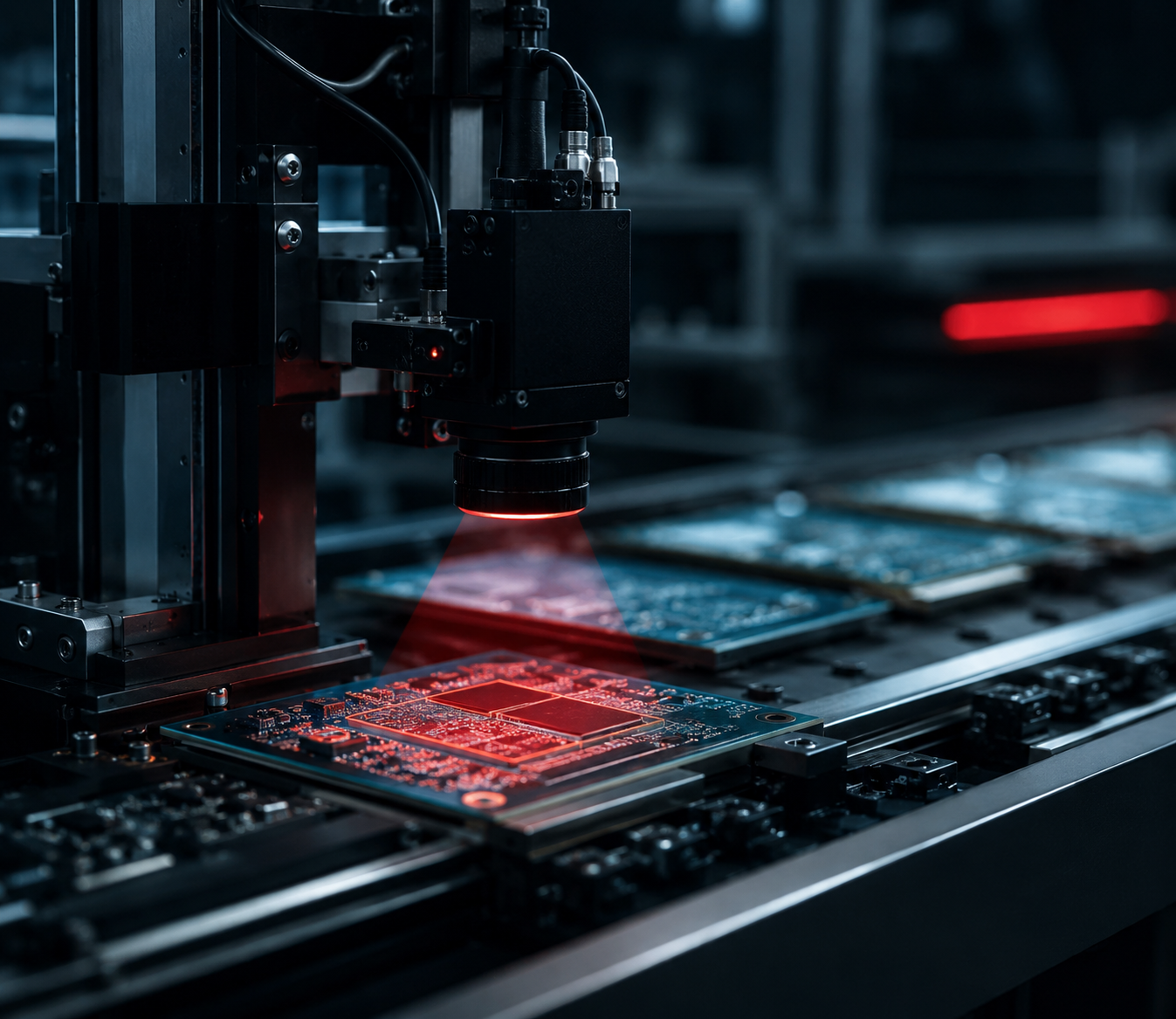
In-process inspection monitors production at critical steps, catching problems before value is added downstream. Automated optical inspection (AOI) for PCB assembly, dimensional inspection for mechanical parts, functional testing at multiple stages—all contribute to final quality.
Final testing validates that finished products meet all requirements. Test development balances thoroughness against test time (which affects manufacturing cost). Tests must reliably catch defective units while passing good units.
Statistical process control tracks manufacturing metrics over time, identifying trends before they become problems. Yield rates, defect types, test failures, and rework rates all provide visibility into manufacturing health.
Launch and Post-Launch Support
Field monitoring tracks products after customer delivery. Warranty returns, failure analysis, and customer feedback identify issues that testing missed.
Product improvements address discovered issues through firmware updates (if over-the-air capability exists), revised manufacturing procedures, or design changes incorporated in future production runs.
Lifecycle management plans for obsolescence management, cost reduction initiatives, and end-of-life strategies.
Real-World Case Studies
Case Study 1: Iris Recognition Device
Dysol developed an iris recognition device for an AI security company requiring identification with exceptional accuracy and image quality. The project demanded expertise across multiple domains:
Optical engineering designed illumination and imaging systems capturing iris detail necessary for reliable recognition. This required specialized lenses, precise positioning, and carefully controlled lighting.
Image processing extracted and enhanced iris features from captured images, feeding them to recognition algorithms.
Embedded systems managed camera control, image capture, processing, and communication with backend systems—all within tight performance and power constraints.
Mechanical design packaged sophisticated optics and electronics into a form factor appropriate for deployment environments.
Iterative refinement through multiple prototype cycles improved performance, manufacturing readiness, and cost. The final product exceeded market standards and supported future capability expansion including facial recognition and extended scanning range.
Case Study 2: Solar-Powered Breast Pump
Developing the world's first solar-powered breast pump presented unique challenges:
Medical device requirements demanded safety, reliability, and regulatory compliance while serving users in resource-constrained settings without reliable electricity.
Power systems engineering optimized every aspect of power generation, storage, and consumption. Solar panel sizing, battery chemistry selection, charging circuitry, and load management all required careful analysis and testing to achieve target performance.
Biomedical engineering ensured appropriate suction characteristics, safety limits, and hygienic design suitable for medical device certification.
Mechanical design balanced durability against portability and cost. The device needed to survive harsh environments while remaining affordable for NGO distribution.
Extensive field trials in target regions validated performance under real-world conditions and informed final refinements before production launch.
The product succeeded where many innovative medical devices fail: it met regulatory requirements, achieved manufacturing cost targets, performed reliably in challenging environments, and delivered meaningful impact to underserved populations.
Case Study 3: National-Scale School Attendance System
Dysol engineered a computer vision system for tracking student attendance and engagement across classrooms at national scale:
Computer vision algorithms provided accurate facial recognition in varying classroom lighting, identified students reliably despite changes in appearance, and monitored engagement through behavioral analysis.
Edge computing architecture processed video locally at each installation, minimizing bandwidth requirements while preserving student privacy.
System integration connected vision systems with school databases, attendance management systems, and administrative interfaces.
Security and privacy received paramount attention given the sensitive nature of student data and images. System design incorporated encryption, access controls, and audit trails meeting relevant regulations.
Scalability considerations ensured that architecture could expand from pilot installations to nationwide deployment without fundamental redesign.
Successful deployment improved administrative efficiency, provided educators with actionable insights about engagement, and demonstrated computer vision's potential for education applications.
Building Product Development Capability
Organizations succeed in product development by building capability systematically:
Multidisciplinary Teams
Product development requires diverse expertise working together:
Industrial designers envision product form and user interaction
Mechanical engineers design structures and mechanisms
Electrical engineers create circuits and power systems
Firmware developers write embedded software
Manufacturing engineers ensure producibility at scale
Quality engineers establish testing and verification
Project managers coordinate activities and manage timelines
These specialists must collaborate effectively, understanding enough about adjacent disciplines to make coordinated decisions.
Process Discipline
Successful organizations follow disciplined processes while remaining flexible enough to adapt:
Stage-gate reviews at key milestones (end of feasibility, architecture review, design freeze, pilot build) provide decision points to continue, pivot, or cancel projects before additional investment.
Design reviews bring multidisciplinary perspectives to evaluate designs before committing to expensive next steps. Catching problems in CAD costs hours. Catching them in production costs thousands.
Change control manages scope evolution through formal evaluation of proposed changes: What's the benefit? What's the cost in time, money, and risk? Is it worth it?
Risk management identifies, tracks, and mitigates risks throughout projects. Regular risk reviews ensure that emerging problems get visibility and attention.
Learning Systems
Organizations that improve develop mechanisms for learning:
Post-project reviews capture lessons from completed projects (successful or not) to improve future work.
Failure analysis treats problems as learning opportunities rather than occasions for blame. Understanding root causes prevents recurring issues.
Knowledge sharing through documentation, training, and mentoring distributes learning across the organization.
Continuous improvement treats processes as evolving capabilities to be refined rather than fixed procedures to be followed.
Choosing Product Development Partners
Organizations lacking internal product development capability often partner with external firms:
What to Look For
Relevant experience in similar product categories indicates understanding of domain-specific requirements and challenges.
Multidisciplinary capability under one roof accelerates development by eliminating coordination overhead between multiple vendors.
Manufacturing relationships and Design for Manufacturing expertise prevent the prototype-production gap that kills many projects.
Communication and collaboration determine how effectively partners integrate with your organization and respond to evolving requirements.
Portfolio and references demonstrate past success and provide validation through customer feedback.
Engagement Models
Full-service product development from concept through production suits organizations with limited internal hardware expertise. Partners manage entire technical execution while client maintains business and market focus.
Targeted engineering support brings specialist expertise for specific subsystems or phases while client maintains overall technical leadership.
Manufacturing services focus on the production transition, taking proven designs and making them manufacturable at scale.
Choosing appropriate engagement depends on internal capabilities, organizational preferences, and project characteristics.
Conclusion: Product Development as Competitive Advantage
Organizations that master product development gain sustainable competitive advantages. While ideas are cheap and widely available, execution capability—transforming concepts into market-ready products efficiently and reliably—is rare and valuable.
This capability builds over time through experience, process refinement, and accumulated expertise. Each product developed strengthens the muscle: technical skills improve, manufacturing relationships deepen, process understanding sharpens. Organizations become faster, more efficient, more reliable.
At Dysol, we've developed products across enormous range: medical devices, consumer electronics, industrial equipment, defense systems, agricultural technology. This breadth provides perspective few organizations possess: understanding principles that transfer across domains while respecting unique requirements of each category.
We've guided products from initial napkin sketches through to millions of units manufactured. We've rescued projects spiraling toward failure and accelerated development timelines thought impossible. We've engineered solutions to problems others declared unsolvable.
Product development is complex, risky, and demanding. But with systematic approaches, multidisciplinary expertise, and disciplined execution, ambitious visions become tangible products that work reliably and deliver value to users.
The difference between products that ship and those that don't typically isn't the quality of the initial idea—it's the capability to execute development from concept through production. That capability is what Dysol provides.
Ready to develop your product idea into market reality? Contact Dysol to discuss how we can bring your vision to life. Email: danyaal@dysol.ae | www.dysol.ae
SHARE ARTICLE